


Studio Art
Our Studio Art department features two Head Teachers and a Resident Teacher, allowing for significant depth of curricular development and cross-subject collaboration.
Each year, this team centers their curriculum around a yearly theme, with recent themes including Light, The Times They Are A-Changin’, and Art and Community. Each grade’s artwork is then on full display at the annual Festival of the Arts, a community-wide celebration of the year’s theme and our student artists.
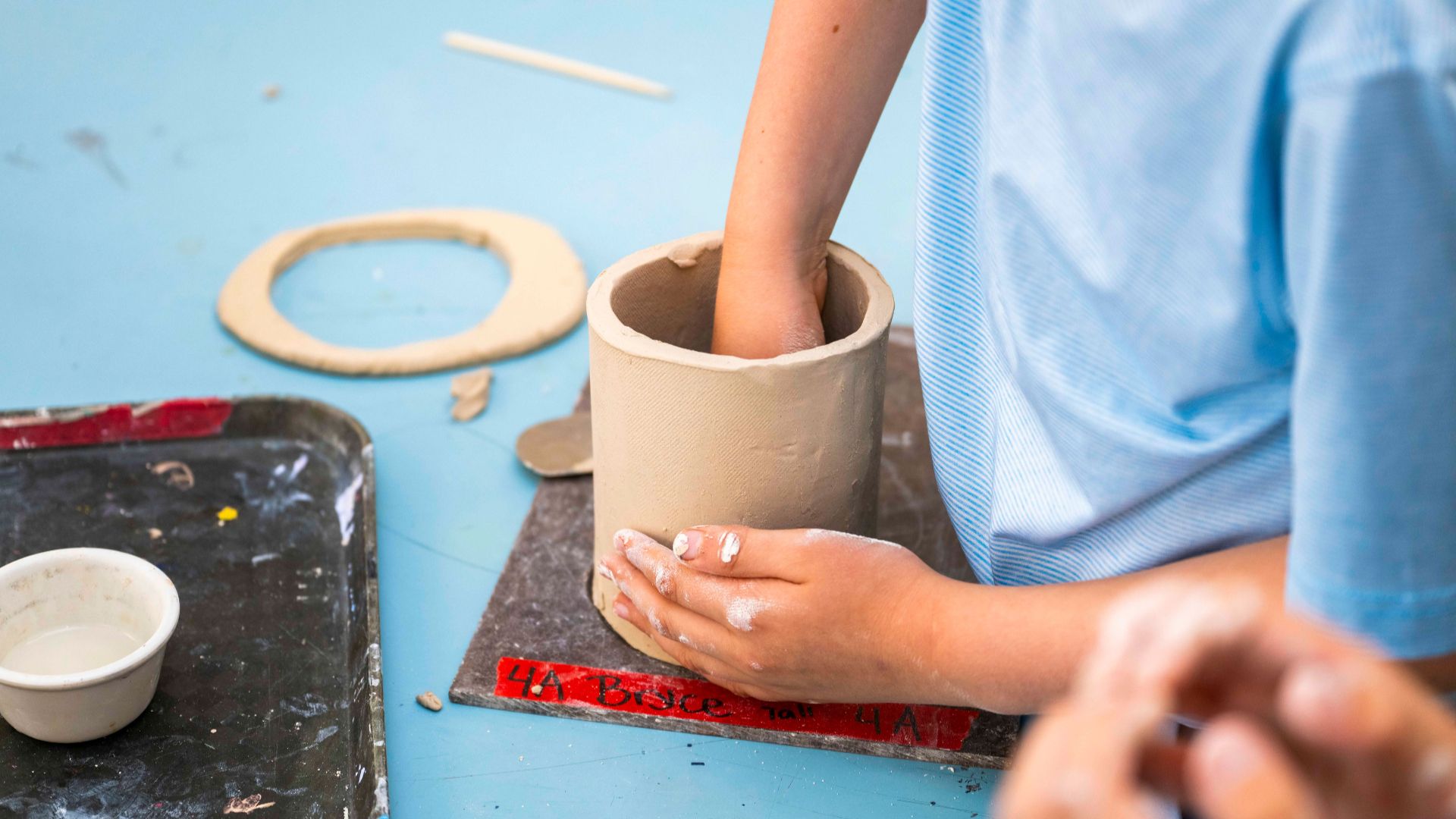
Lower School art curriculum builds on essential artistic skills while encouraging the development of personal voice, problem-solving, and creative risk-taking. Young artists engage in hands-on exploration, gradually building patience and perseverance by engaging in multi-week projects. Building from the elements of art and experimenting with supplies like oil pastels and mixed media, students move into projects that develop an understanding of more complex techniques such as pattern transfer, advanced ceramics, and incorporating digital arts.
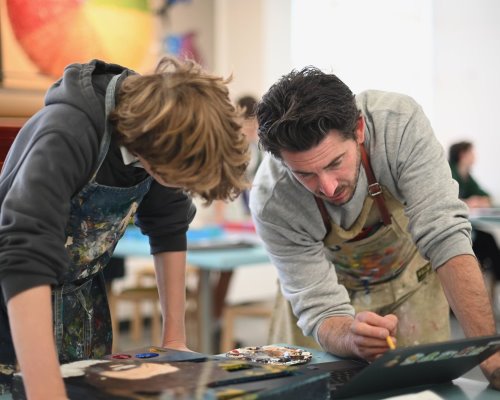
Upper School art curriculum is structured as a progressive journey, designed to cultivate technical mastery, critical engagement with artistic influences, and self-confident creative expression using diverse media. The initial years establish foundational competencies through drawing techniques, including perspective and observation, followed by an in-depth study of color theory, value, and shading through detailed exercises in mixing and graphite drawing. As students advance, they explore three-dimensional construction using tactile mediums like clay for intricate ceramic pieces and sculpture, often engaging in interdisciplinary projects that connect historical themes or explore abstract concepts. In seventh and eighth grade art electives, students tackle advanced ceramics and painting techniques, emphasizing personal meaning and research into contemporary and historical artists.
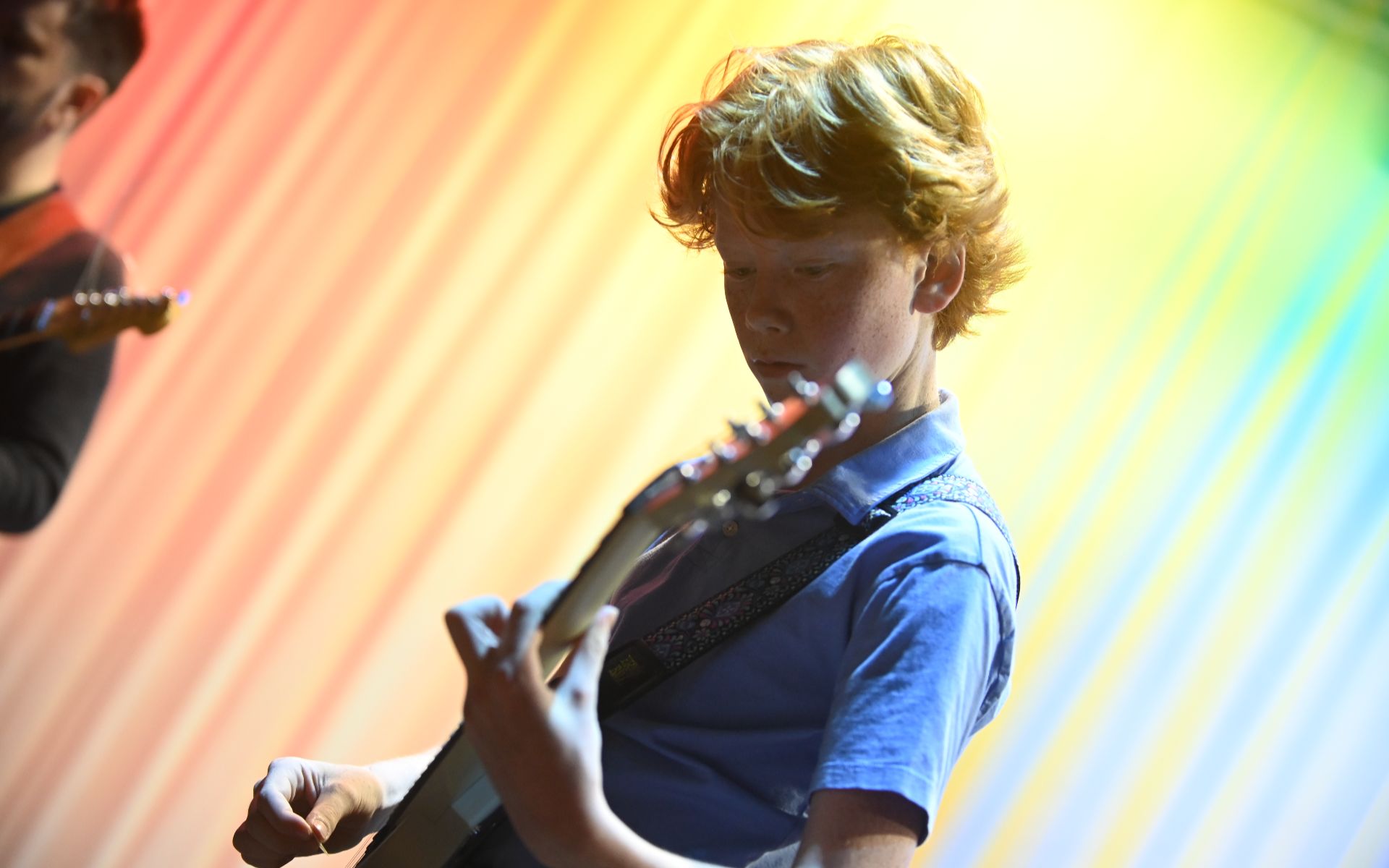
Music
Music in the Lower and Upper School is designed as a continuous, thoughtfully sequenced journey that nurtures confident, expressive young musicians.
As students transition into electives, they deepen their technical knowledge by studying complex rhythmic concepts in Band, such as compound meter and syncopation, or by creating and visualizing interlocking rhythmic patterns using grid systems in Drumline. This structured progression ensures students develop essential technical accuracy and skill in group performance while consistently enhancing their ability to intentionally interpret and articulate musical ideas.
Lower School music curriculum is intentionally structured to build community, collaboration, and foundational musical literacy through diverse vocal and instrumental experiences across all grade levels. Early grade levels focus on developing rhythmic understanding and dexterity using various percussion instruments, such as practicing ensemble work and proper technique with boomwhackers and rhythm sticks. Students consistently develop pitch concepts and melodic direction through vocal activities, including forming pure vowel sounds and singing melodies using solfége hand signs. As students advance, they are introduced to complex concepts like harmony, tone color, and notation by drawing the treble clef and exploring instruments like steel drums and the melodica. The program culminates in a focus on vocal performance, cultural and historical music styles, and live presentation skills.
Upper School music continues with foundational instruction in fifth and sixth grade, where all students participate in a core music class, followed by a shift to elective, choice-based offerings in the seventh and eighth grades. Students build proficiency by mastering musical fundamentals like rhythm patterns and form, and by analyzing how composers utilize elements such as modes, tempo, and dynamics to shape the emotional impact of a piece. The curriculum balances technical skill and a focus on performance, with preparation for concerts while refining vocal technique, achieving vocal blend, and mastering ensemble coordination.
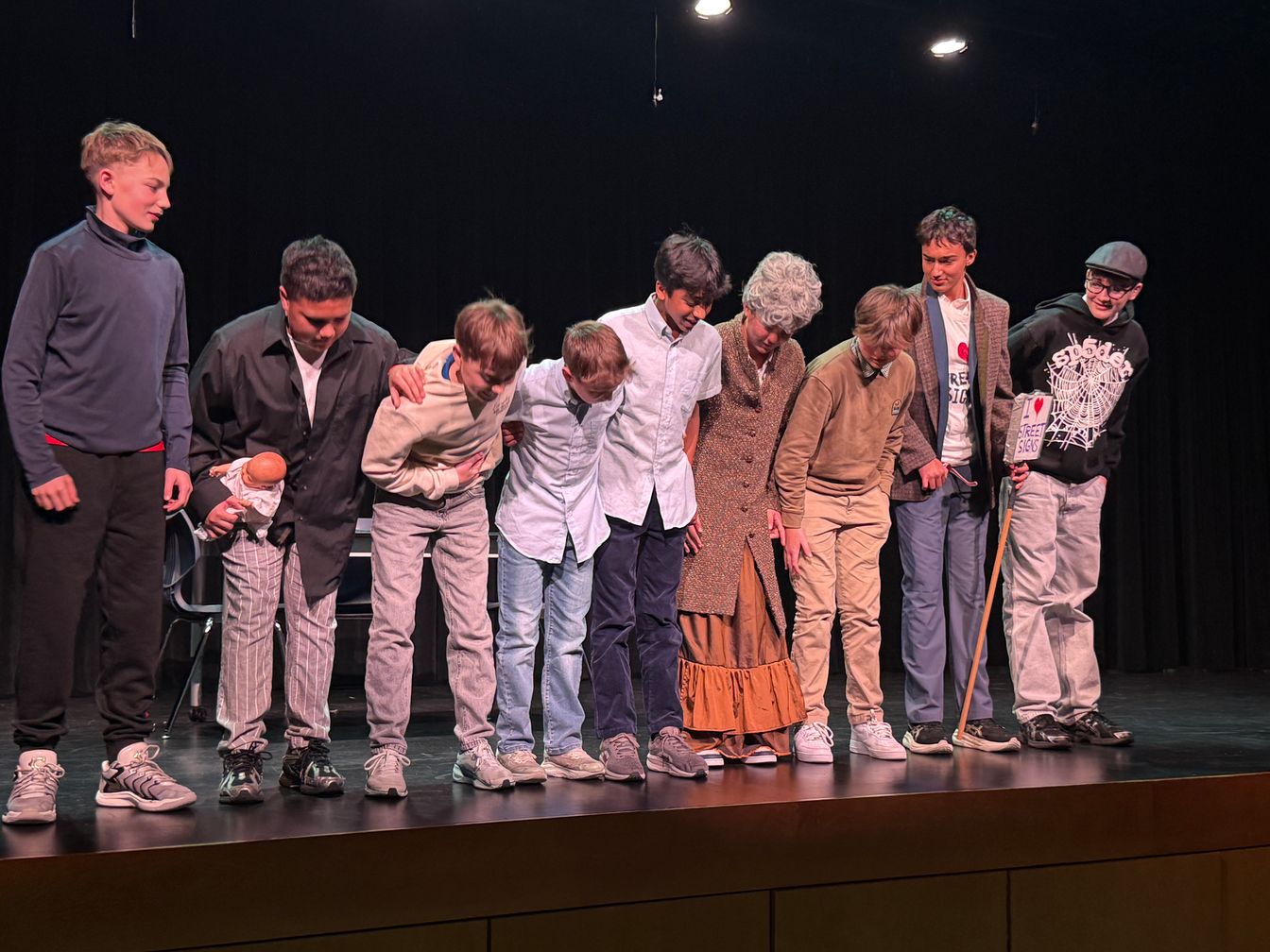
Theater Arts and Performance
Leveraging our Dolby Family Center for the Performing Arts, students are able to build theater arts, performance and public-speaking skills over the arc of their journey at Town.
Students from K-8 participate in speaking and performance opportunities at all-school assemblies. During our community-wide events, boys have the experience of performing on stage in front of a large audience, including at Grandparents and Special Friends Day and our annual Winter Concert.
In third and fourth grade, Theater Arts courses allow students to explore acting exercises designed to build ensemble, collaboration, empathy, and active listening. Students develop a sense of stage vocabulary and projection, and utilize tongue twisters to practice diction and voice dexterity. Often tying their work to historical events they have learned about in classroom studies, third grade actors focus on collaborative theatrical skills, learning music, and using storytelling to prepare for a spring theater arts production. In fourth grade, students rehearse a group production, developed through their choices in blocking and character, to cultivate a sense of ownership and high engagement.
Theater Arts continues as an elective in 7th and 8th grade, where students can further explore their interest.